ENTER TEXT HERE
Enrolment is currently closed. The next group opens soon. Join the waiting list
A 4-WEEK LIVE TRAINING FOR CLASSICAL MUSICIANS
The Unshakeable Musician
The 4-week training to stay calm, present and in control when the pressure hits.
You already know what you're capable of — you've heard it, alone, when nothing was at stake. This is the four-week training that makes that version of you show up when everything is. Until steadiness stops being a technique you reach for and becomes the way you play.
The group is small and it fills from this list. You will hear before anyone else —
with the dates and the best price, before it opens publicly.
Next Cohort starts Sunday, Aug 30 · Enrollment closes Fri, Aug 28
You've felt it — even for a moment.
A run-through where the nerves didn't run the show. A rehearsal where you were simply in the music, not fighting yourself.
You know that version of you exists, because you've met them.
Here's the honest part: feeling it once changes an evening. It doesn't change what happens next month, in the audition room, when the pressure is real and nobody's there to steady you.
But the usual next steps don't close that gap:
(What most musicians never get told: this shift can happen in minutes, not years — once you're training the system instead of the notes. The work is making that the rule, not the exception.)
❌
Practising more to feel ready
More reps from a place of stress don't build steadiness — they rehearse the checking, the testing, the distrust, right into the passages where it matters most.
❌
Telling yourself to just stay calm
You can't will your way out of a stress response. Without a trained method, "stay calm" is a command your nervous system ignores — precisely when the stakes are highest.
❌
Hoping the good days outnumber the bad
Leaving your real level to chance isn't a plan. On the day it counts, you don't rise to the occasion — you fall to your level of training. So train the level.
Understanding didn't get you here, and understanding won't get you there. Training will.
You know this better than anyone — reading about vibrato never produced a vibrato. The same is true for steadiness.
Four weeks. One skill.
Trained until it's yours.
The Unshakeable Musician is a small-group cohort that installs the complete C.O.R.E. system, from the first move to the last.
Not more information: installation.
Weekly modules— short video lessons + one guided practice + one written exercise. Built for real musician schedules: 15–20 minutes of daily practice, concrete, no fluff.
5 live calls with me — Four weeks. An onboarding call, then one live session a week, and the Pressure Lab at the end. Dates go out with the invitation.
Daily accountability in the cohort WhatsApp group — a 10-second daily check-in (an emoji counts). The difference between a course you watch and a training you complete.
A measurable before-and-after — the same 0–10 steadiness check in week 0 and week 4, so you see the change in your own number, not on my word.
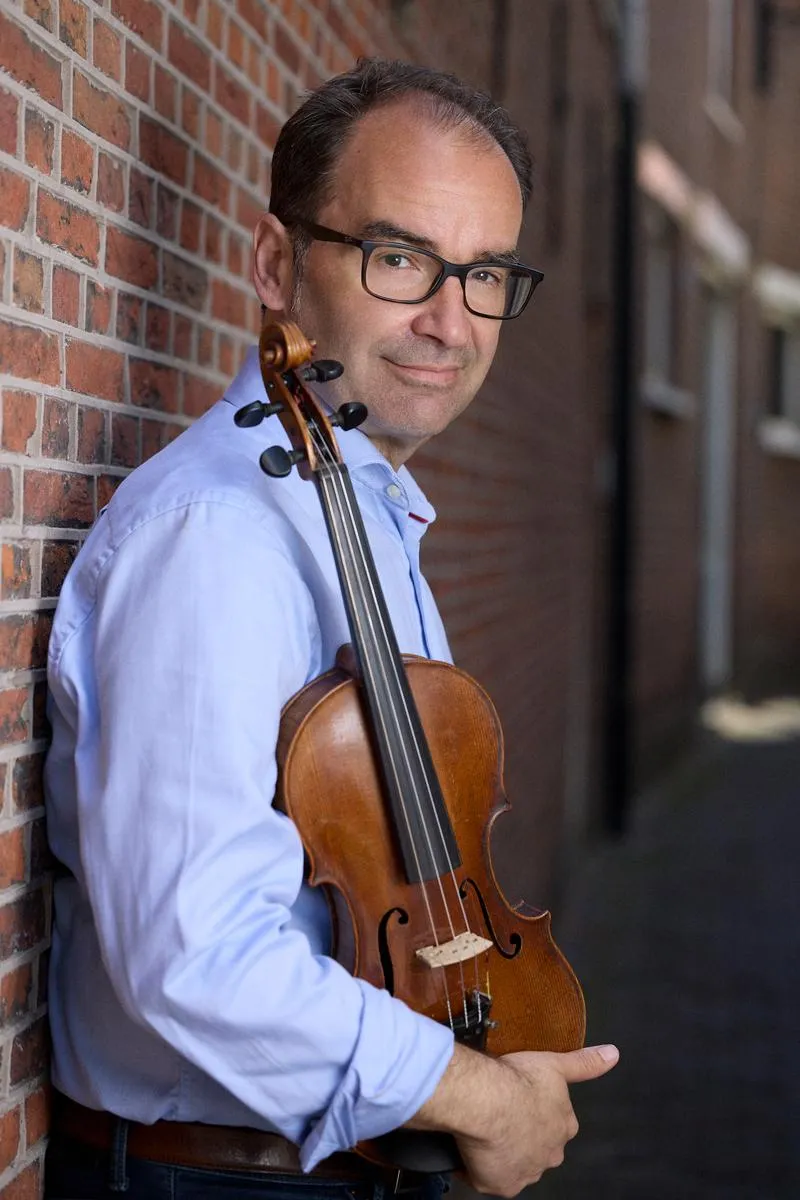
Hi, I'm David
I'm a professional violinist with 35+ years of professional orchestral experience, an ICF PCC-certified coach with over 1,500 hours, and a certified mindfulness teacher.
I didn't come to this from a book. I came to it from inside a professional music career — the auditions, the pressure, the self-criticism that shows up precisely when you need to be present. There was a time when the pressure nearly ended that career, and no amount of practice fixed it.
What I teach is what changed everything. Not by making the pressure disappear — by training what happens when it arrives. And I keep every cohort to 15 musicians, so this is never a webinar. I see every person in the room.
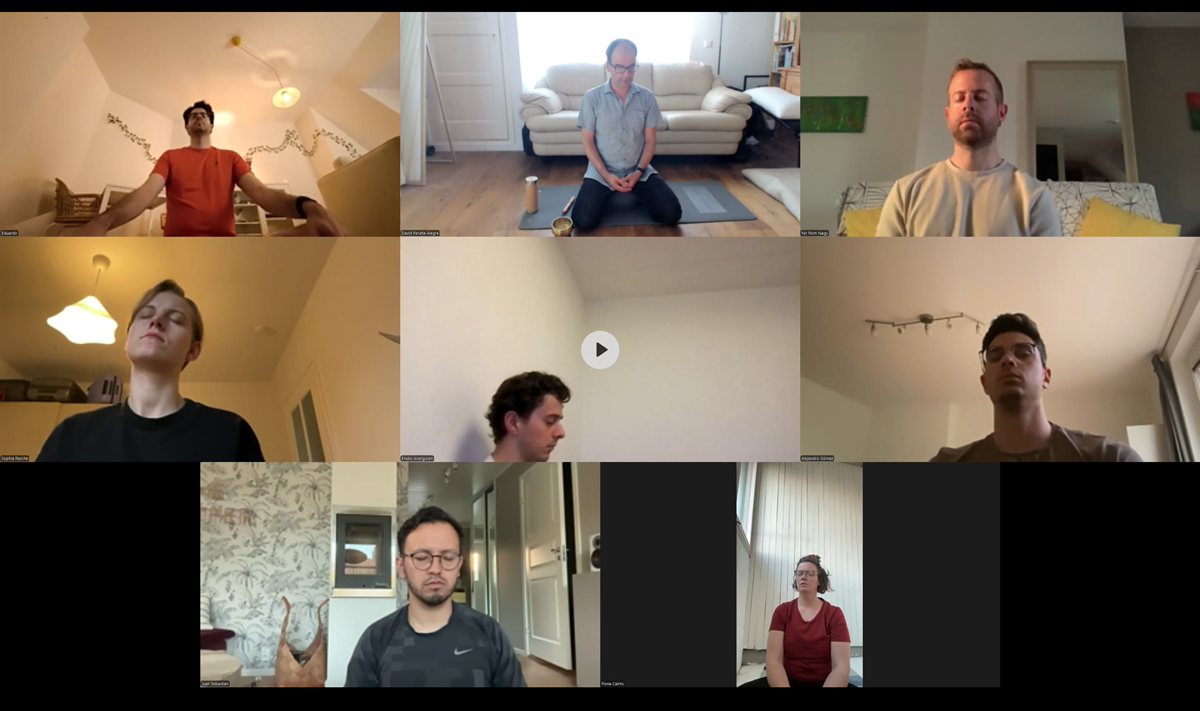
What becomes possible in four weeks.
Here's a question worth sitting with:
What if the pressure didn't have to disappear for you to play at your real level?
✅ You settle your own nervous system on command — before an audition, mid-rehearsal, in the pause before you walk on. Not by forcing calm, by training the response.
✅ The spiral loses its grip — you catch the automatic thoughts as thoughts, not verdicts, and interrupt them before they reach your hands.
✅ You walk in with a plan instead of a hope — and then, in the Pressure Lab, you prove to yourself that it holds.
This isn't about adding one more thing to a full schedule. It's about changing what happens in the moments you already play through. Take your fear with you — just don't let it sit in the driver's seat.
How the four weeks are built: C.O.R.E.
Week 1 — Calm the System.
You learn what pressure actually does to your body, and how to settle your nervous system on command instead of white-knuckling through it. The shaking, the shallow breath, the racing thoughts get a handler.
Week 2 — Observe the Patterns.
You map your personal pressure patterns — the automatic thoughts, the self-talk, the checking habits that fire before anyone has heard a note. What you can see, you can interrupt.
Week 3 — Rewire the Response.
You train a different response to the same triggers: anchoring techniques and the 3 steps rest — a concrete protocol for the moment things wobble. Not hoping to stay calm; having a trained move that works under load.
Week 4 — Execute When It Counts.
You put it together for real conditions: your performing identity, your pre-performance routine, and preparation for the live Pressure Lab.
The moment everything builds toward:
The Pressure Lab.
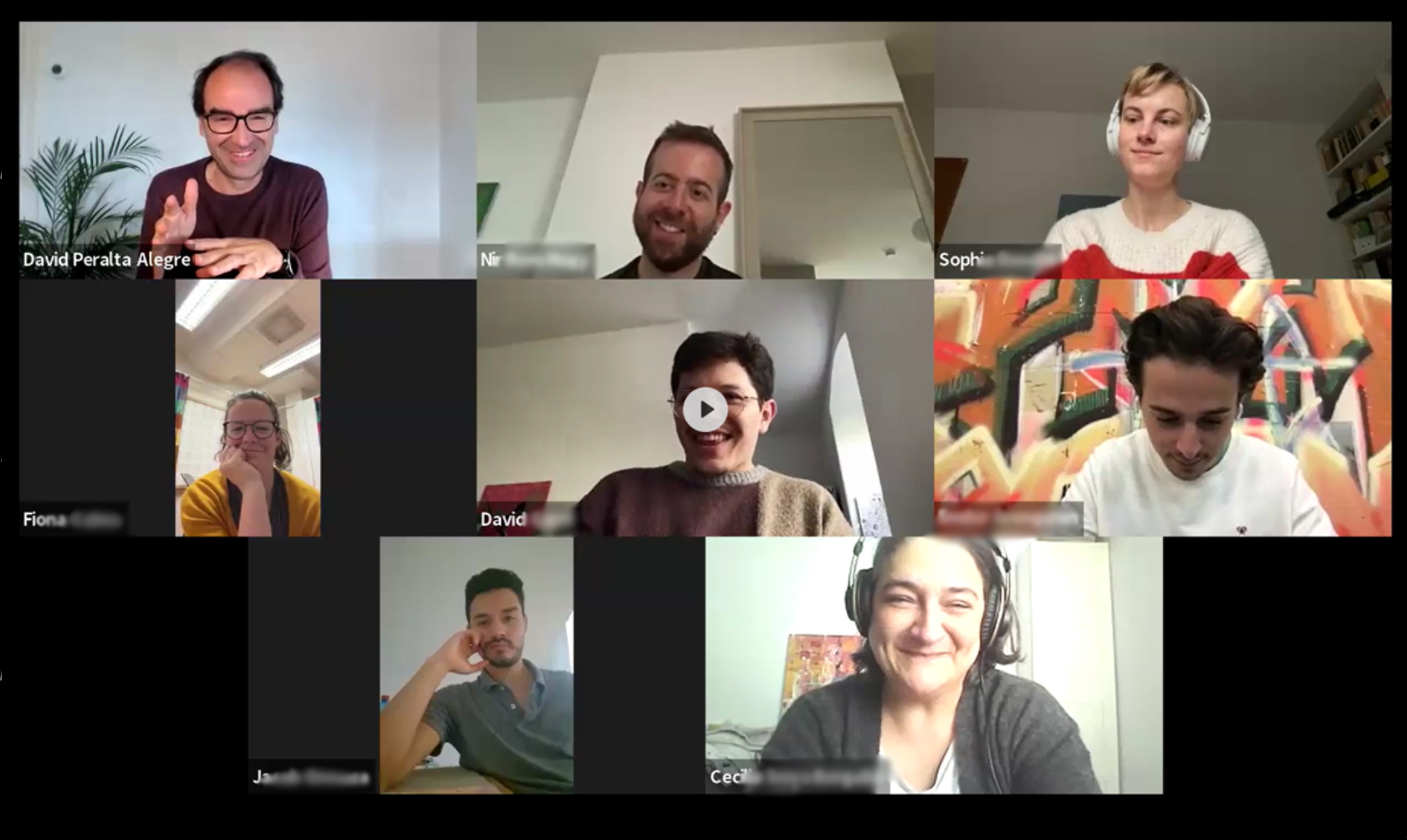
On Saturday, September 26, every member of the cohort plays 60–90 seconds — live, in front of the group — applying C.O.R.E. in real time. Visible preparation before. Immediate debrief after. Me guiding you through the whole thing.
Real pressure. A trained response. And your own proof that it holds.
This is why the cohort has limited spots: everyone plays. It's not a webinar with a performance anecdote at the end — it's the safest high-pressure room you'll ever walk into, designed so you leave knowing something about yourself that practising alone could never have shown you.
Everything that's included...
The complete 4-week C.O.R.E. training — so steadiness stops being a lucky day and becomes your default setting.
5 live group calls with David: An onboarding call, then one live session a week, and the Pressure Lab at the end. Dates go out with the invitation.
4 guided audio practices — one per week, yours to use before every rehearsal, lesson and concert during the training.
The written toolkit — the stress-mapping tracker, the thought-pattern questionnaire, the 3 Steps Reset protocol, and your Pressure Lab prep sheet.
The cohort WhatsApp group with daily check-ins — so you train alongside musicians who get it, instead of alone. Again.
The Pressure Lab — your 60–90 seconds of proof, with preparation and debrief.
Access to all materials through the training + 30 days after — long enough to consolidate, short enough that you actually do it.
Cohort details
📅 Sunday, Aug 30 → Saturday, Sep 26, 2026
🗓 Live calls: Saturdays (onboarding on Sunday Aug 30)
🕑 14:00 CEST · via Zoom (onboarding at 20:00 CEST)
🎻 Pressure Lab: Saturday, Sep 26
🌍 Europe · USA · UK · Latin America · Australia friendly
Total investment: €197
For perspective: that's less than most conservatory professors charge for a single one-hour masterclass. This is four weeks of training, five live sessions, and the Pressure Lab.
Enrollment closes: Friday, Aug 28, 23:59 CEST — or when the available spots are filled, whichever comes first
Why spots are limited: everyone plays in the Pressure Lab. That doesn't work with 40 people. When the seats are gone, they're gone!
TESTIMONIALS
Musicians who trained this way.

"This awareness has brought a sense of calm"
"The programme has been a truly eye-opening experience. I’ve learned to be more present and to create space between myself and my thoughts. While I still catch myself overthinking the past or worrying about the future, I’m now more aware that these are just thoughts-not reality. This awareness has brought a sense of calm, focus and clarity into my life. I highly recommend this journey to anyone seeking more mindfulness and peace in their everyday life.."
-Nir Rom Nagy


"My life changed forever"
"I am taking this new-found inner calm and connection to my natural needs and instincts. Letting go of perfectionism and actionism and prioritizing calm and mental clarity instead feels like a very valuable shift of perspective both for my professional and personal daily life. I feel like I am taking more responsibility for my life, my choices and reactions. Over all, I am much calmer and more in touch with my inner needs and subtle changes in mood and energy."
- Sophia Rasche
A few things worth saying directly.
“I don't have 15–20 minutes a day.”
The musicians who get the most from this aren't the ones with the most time — they're the ones who decide it matters. The daily practice doesn't add to your load; it replaces something already taking that time: the rumination, the checking, the mental noise between sessions.
“I'm terrified of playing in the Pressure Lab.”
Good — that's the point, not a problem. You won't be thrown in: the entire fourth week prepares your 60–90 seconds, you'll have a trained protocol to run, and the room is 14 musicians doing the exact same brave thing. Nobody has ever regretted their Lab.
“I've started things before and didn't follow through.”
That's exactly why this is live, small, and built on daily check-ins. You don't disappear into a video library — 14 people and I notice when you're quiet.
Frequently Asked Questions
What if I can't make a Saturday call?
All calls are recorded and posted the next morning. Aim to be live for the onboarding and the Pressure Lab; the middle calls survive on replay.
Is this meditation?
It's performance training. There's one short guided practice per week inside the system — because regulating your nervous system is a physical skill, not a philosophy. Everything is practical and built specifically for musicians.
Am I good enough / too experienced for this?
The cohort typically spans conservatory students to orchestra members. The pressure pattern is identical at every level — only the stakes change. You'll fit.
What happens after the four weeks?
You keep material access for 30 more days to consolidate. And in the final call I'll tell you — briefly, no pressure — what continuing to train with me looks like, for those who want to go further. No obligation attached to any of it.

You're covered for the full 30 days.
That's the whole cohort — every live session, the daily practice, the Pressure Lab. Attend all five calls live, do the work, and if by the end you honestly don't feel more in control under pressure, write me one email within those 30 days and I'll refund every cent. No forms, no explanation.
You've spent years training your hands.
Four weeks on the rest of you.
The notes were never the problem. Every hour you've ever practised is still in there, waiting for conditions your nervous system hasn't allowed. This is the training that changes the conditions.
Here's something worth considering: if you join and give it the four weeks, the worst case is you walk away steadier than you came in. But if you don't? The next cohort is months away — and the pattern stays exactly where it is.
Cohort starts Sunday, August 30. Limited seats.
Enrollment closes Friday, August 28.
P.S. You already know the difference between the version of you that plays freely and the one that shows up under pressure. Four weeks is how you close the gap between them. (And if you were at the workshop — you felt that gap move in five minutes. Imagine four weeks.)